Our solutions
We are designing two clinic models, Wave and Loop, that would screen, triage and treat women in one place, as a mobile clinic in a van or as a fixed clinic. They do not exist yet: we are planning a pilot in Cameroon to test them. The two technologies inside them are further along.
Everything in one clinic
Each clinic is designed to include HPV testing, our automated Pap stainer (GyroStainer), a digital slide scanner, the telecytology portal and thermal ablation. Concept · pilot planned
Mobile clinic
We go to the women
A fully equipped van that would travel from village to village, to reach women in rural and hard-to-reach areas. A mobile Loop clinic would use one van, and a mobile Wave clinic two.
Fixed clinic
Women come to us
The same equipment and pathway, set up in an existing health centre or building. Suited to towns and cities, where many women can reach the clinic.
Two rhythms: Wave and Loop
The two models are designed for different settings. They differ in how many women they would serve and how quickly treatment would follow.

Wave: high volume
For sites that many women can reach, like towns and cities.
How a Wave clinic would work
- Day 1Self-sample and HPV testWomen take their own sample in private. All samples are tested together in one batch.
- Day 2Stain and remote reviewHPV-positive women return for a cervical sample, stained by our automated Pap stainer and read through the portal.
- Day 2Treatment as results arriveCIN2 and CIN3 are treated with thermal ablation. Suspected cancers are referred.

Loop: lower volume
For smaller or remote communities, where women are treated in one visit.
How a Loop clinic would work
- MorningSelf-sample and rapid HPV testEach woman takes her own sample and gets her HPV result in about an hour.
- AfternoonStain and remote reviewHPV-positive women give a cervical sample, stained by our automated Pap stainer and read through the portal.
- AfternoonTreatment before she goes homeCIN2 and CIN3 are treated with thermal ablation. Suspected cancers are referred.
Next step
Piloting the clinics in Cameroon
Before any clinic is offered, we are planning a pilot in Cameroon to test the mobile and fixed formats. It will measure three things:
- CompletionHow many women go all the way from screening to treatment.
- LogisticsWhat each format needs day to day: staff, supplies, connectivity and patient flow.
- CostThe cost per woman screened and treated, for mobile and fixed formats.
Autostainer
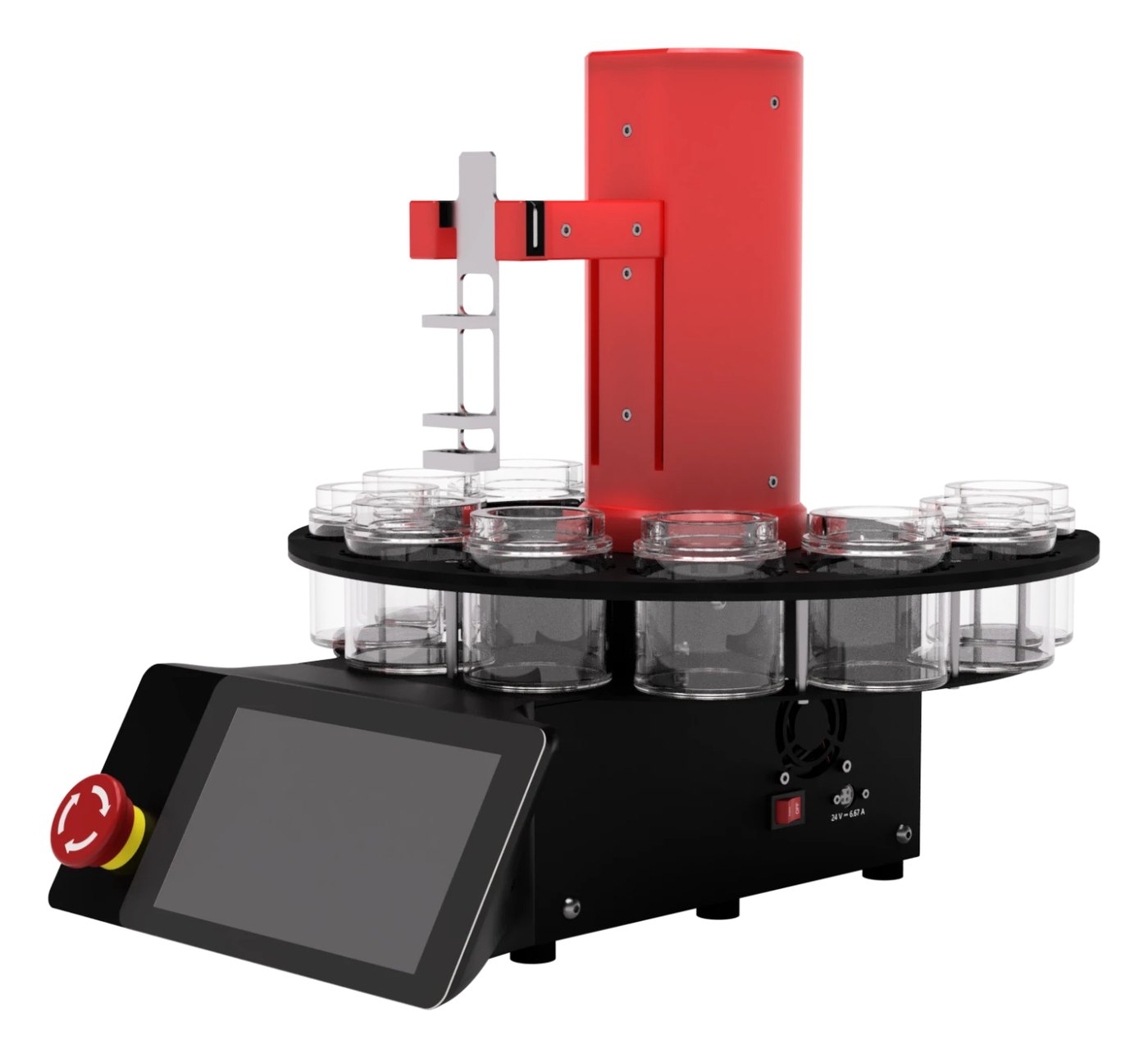
GyroStainer
Validated on Pap slides · in pilot testingA compact auto-stainer that applies the Pap stain consistently, so slides are easier to read and results more reliable. Other staining protocols, such as H&E or Giemsa, can also be programmed and run on GyroStainer.
Validated on Pap-stained slides at the Geneva University Hospitals, and now being tested in pilot studies. It is designed for every Wave and Loop clinic, and for existing laboratories and clinics, enabling faster and high-accuracy results.
Our pre-validated Pap stain protocol
Sized for decentralised, low-throughput triage, GyroStainer carries up to four slides through every stain, rinse and dehydration bath with precise timing, then dries them ready for scanning. Protocols are chosen on the touchscreen, or created and edited from a web browser. Follow the full protocol below, sped up.
Four slides loaded
Software
Telecytology portal
In developmentThe portal is designed to connect each site with a trusted network of pathologists, who review slides remotely and return results in under an hour, so women can be treated straight away. No pathologist would be needed on site.
Designed for every Wave and Loop clinic, and for existing clinics and laboratories without a pathologist.
From stained slide to result
- DigitiseA digital microscope scans the stained slide into a high-resolution image.
- UploadThe image is uploaded to the portal automatically, with the clinical information needed for a diagnosis.
- Review and returnA pathologist from our network reads the slide and sends the result and recommendation back to the clinic.
A simple interface
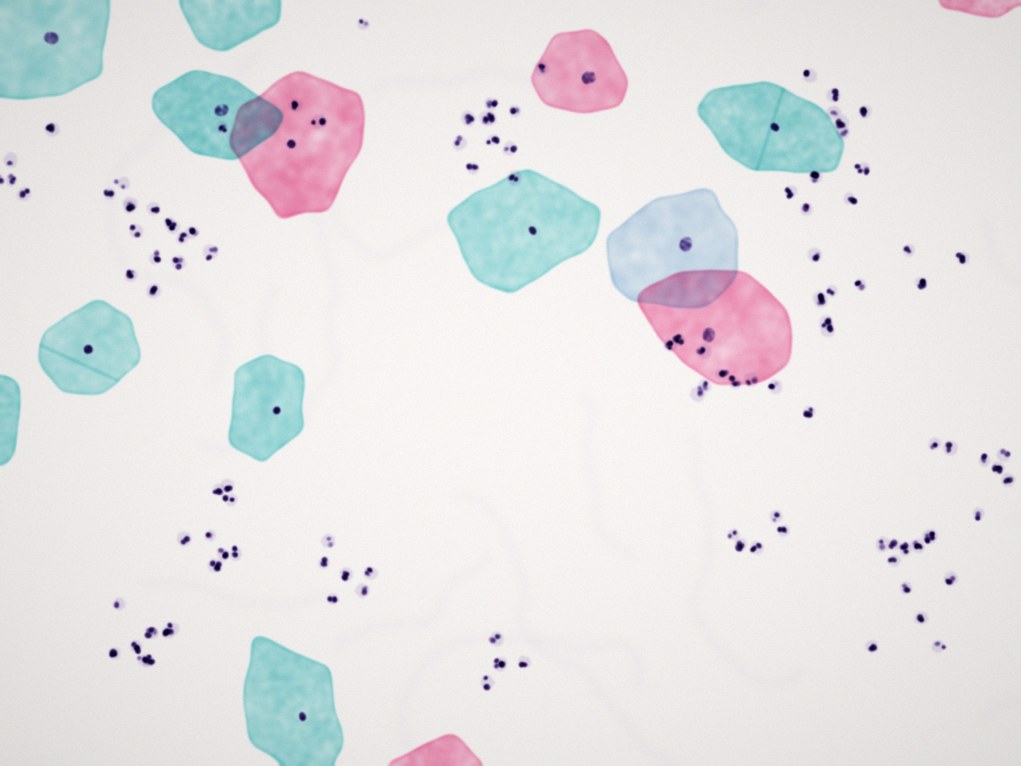
A preview of what a pathologist will see: pick a case, look closer at the slide, choose a result and send the report.
Cases to review
Case
- Code
- Age
- HPV test
- HIV status
- History
Patient data stays protected
The portal is designed so that a woman's name never leaves the clinic. Only a random code, her slide and the clinical data needed for a diagnosis travel, encrypted.
In development
Using machine learning to speed up review
With EPFL's Signal Processing Laboratory 5, we are developing an algorithm that analyses every digitised slide and points the pathologist straight to the most suspicious cells. The pathologist always makes the diagnosis.
- 1DivideThe digital slide is split into small tiles.
- 2AnalyseEvery cell in every tile is isolated and given an abnormality score.
- 3RankThe cells with the highest scores are flagged, up to 40 per slide.
- 4ReviewThe pathologist goes straight to the flagged cells and makes the diagnosis.
Early research figures. Once validated, the algorithm will be built into the portal at no extra cost to our partners.